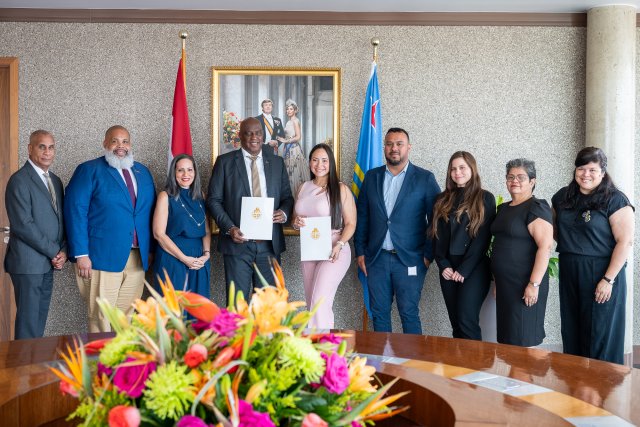
Aruba and Curaçao Sign Memorandum of Understanding (MoU) for Digitization of Education and Digital Government
ORANJESTAD – The governments of Aruba and Curaçao have signed a Memorandum of Understanding (MoU) to strengthen strategic cooperation regarding the digital transformation of education and governance.
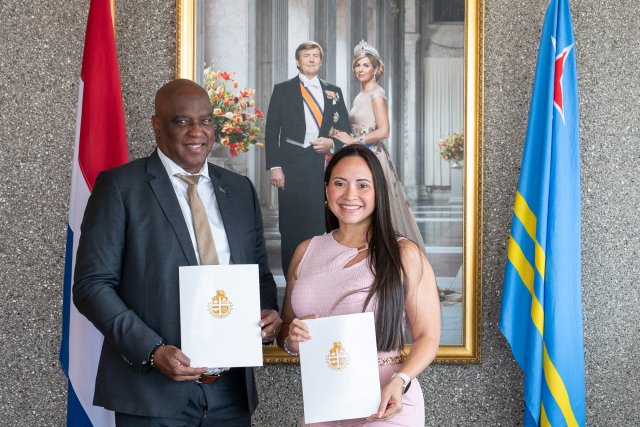
This agreement—signed by Ms. Gerlien Croes, Minister of Kingdom Relations, Education, Youth, Innovation, and Sport of Aruba, together with Mr. Sithree van Heydoorn, Minister of Education, Science, Culture, and Sport of Curaçao—marks a significant milestone for both countries within the Kingdom of the Netherlands.
Exchange of Expertise and Technological Advancement
The partnership is built on the principles of efficiency, reciprocity, and transparency. Curaçao will share its experience and expertise gained from the Central National Education Application (Centraal Landelijke Onderwijs Applicatie - CLOA), a digital system featuring dashboards and centralized educational platforms for managing, monitoring, and evaluating educational data.
In parallel, Aruba will share its progress in e-government, interoperability between public services, and the establishment of a Shared Service Organization to enhance system robustness.
Key Pillars of the Partnership
The agreement covers several key areas of focus for the near future:
- Educational Information Systems: Development and exchange of data platforms, student registration systems, and centralized dashboards to support policymaking.
- Digitization Roadmap: Support in developing a strategic roadmap for the digitization of Aruba's education system.
- Interoperability and Digital Government: Integrating sector-specific education registries with national government base registries.
- Pedagogical and STEM Innovation: Sharing knowledge on curriculum, digital pedagogy, and strengthening digital skills alongside STEM education (Science, Technology, Engineering, and Mathematics).
- Pilot Projects: Joint exploration of projects in digital testing, learning analytics, and blended learning models.
Governance and Next Steps
The agreement spans a three-year term and will be coordinated through a central national point of contact designated by both countries. Furthermore, it serves as a preparatory step toward establishing a more formal agreement through intensive work sessions.
Minister Gerlien Croes expressed great satisfaction with the agreement, noting that it will drive innovation and create new opportunities in education. Additionally, this collaboration reinforces regional ties at multiple levels. With this step, the government reaffirms its commitment to innovative, modernized education that is fully prepared for the future and the demands of the digital age.