Waste in Dams Threatens Public Health
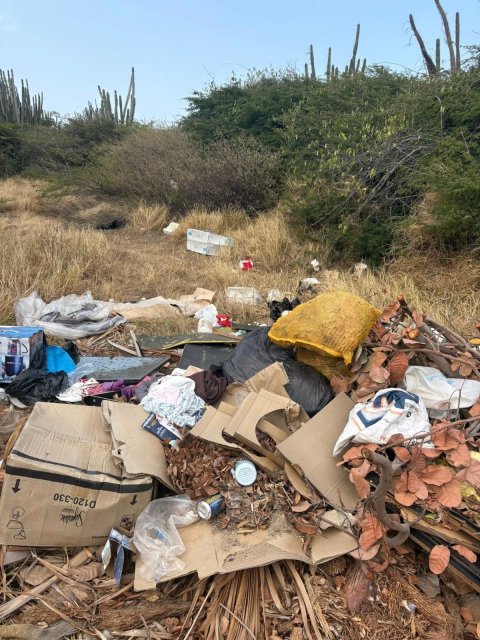
ORANJESTAD – The Department of Agriculture Santa Rosa (Dienst Landbouw Santa Rosa) has expressed concern about the dumping of waste around dams in Aruba.
At several dams, waste is being discarded along the banks or even directly into the water—something Santa Rosa strongly condemns.
These dams serve not only as water storage facilities. In Aruba, many farmers use dam water to irrigate crops and provide drinking water for livestock. When waste is dumped in or around these dams, the water can become contaminated with bacteria, hazardous substances, or other harmful materials that may pose a risk to both animal and human health.
The danger is serious. Animals that drink contaminated water can become ill or transmit diseases. If contaminated water is used for agricultural purposes, pollutants may also enter the food chain. This can create risks to public health, especially when locally grown agricultural products are intended for human consumption.
An appeal is being made to companies that dispose of waste (such as septic trucks) to consider the risks they may cause. Discharging wastewater into dams or washing septic trucks with dam water can contribute to water pollution. Such practices not only harm the environment but may also jeopardize agriculture, livestock, and public health.
Concern is growing as the market for local products in Aruba continues to expand. As more local products are promoted and consumed, it becomes increasingly important to ensure that the water used for agriculture is clean and safe.
Authorities continue to emphasize that dams are not dumping sites for waste. As local production increases and consumption grows, safeguarding the quality and safety of agricultural water becomes ever more essential.
Stay informed:
- Like the Facebook page Directie Volksgezondheid DVG Aruba (Directie Volksgezondheid DVG Aruba)
- Follow us on Instagram: directie_volksgezondheid_aruba
- Visit: www.dvg.aw
- Call: 5224200
- Email: service@dvg.aw