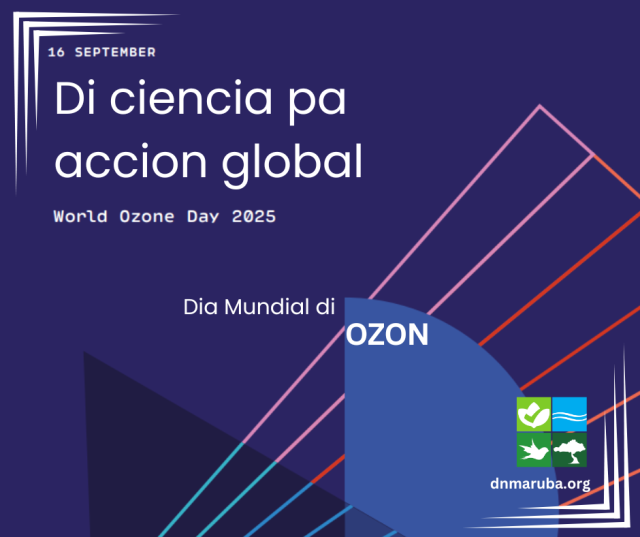
International Day for the Preservation of the Ozone Layer: Progress Through Science and Unity
ORANJESTAD – Every year on September 16, we observe World Ozone Day to celebrate the commitment countries made in 1987 to protect the ozone layer.
This commitment was formalized through the Montreal Protocol, an international agreement to regulate and phase out substances that deplete the ozone layer, protecting both human life and the environment. The day was established by the United Nations to highlight the importance of the ozone layer, which is essential for protecting life on Earth from harmful UV radiation.
This year’s theme emphasizes the crucial role of science in alerting the world to the threats facing the ozone layer.
Forty years ago, concerns raised by the scientific community about the catastrophic effects of chlorofluorocarbons (CFCs) on the ozone layer led to the adoption of the Vienna Convention and, subsequently, the Montreal Protocol. Since then, significant progress has been made in phasing out ozone-depleting substances. These collective efforts have brought us closer to the goal of restoring the ozone layer.
As United Nations Secretary-General António Guterres noted in his message on this occasion:
“Today the ozone layer is healing. This achievement reminds us that when nations heed the warnings of science, progress is possible. Scientists are sounding the alarm once again—this time to warn us that global temperatures are rising dangerously above pre-industrial levels, with all the consequences that come with it.”
In its report for World Ozone Day, the Department of Nature and Environment (DNM) highlights tools available to the refrigeration and air conditioning (RAC) industry to address the use of substances that can harm the ozone layer.
The American Society of Heating, Refrigerating and Air-Conditioning Engineers (ASHRAE), in collaboration with UNEP OzonAction, has launched a new tool to support sustainable practices in the RAC sector. This free checklist, complete with guidance tables, helps technicians, engineers, manufacturers, and suppliers evaluate sustainability, reduce emissions, and align their operations with environmental and energy efficiency goals.
Because RAC systems often use refrigerants that contribute to global warming, this checklist provides practical support for building more sustainable refrigeration systems. As Jim Curlin, Head of UNEP’s Ozone Secretariat, explained, tools like this are essential for implementing environmental agreements at the operational level, helping countries, particularly developing ones, overcome technical and regulatory challenges under the Montreal Protocol and its Kigali Amendment.
This initiative forms part of the broader ASHRAE–UNEP collaboration to promote climate- and ozone-friendly practices, while strengthening implementation of the Montreal Protocol. The RAC toolbox can be accessed at: www.ashrae.org/unep-RACchecklists.
World Ozone Day is an opportunity to reflect on past achievements, current actions, and future commitments under the Montreal Protocol and the Kigali Amendment. It serves to raise awareness about the importance of multilateral environmental agreements.
DNM expresses its gratitude and calls on the community to remain informed and engaged in international efforts. Thanks to the collective work of the United Nations, governments, industries, and communities worldwide, we have come this far, but we must not stop here. Together, we must continue to protect the ozone layer.