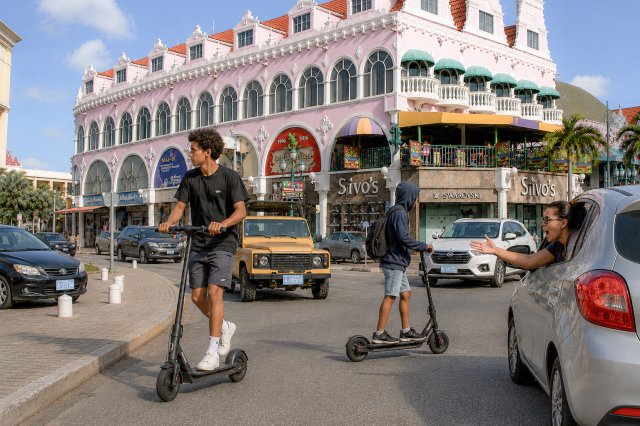
Aruba Joins International Trend by Banning Electric Scooters to Protect Public Safety
ORANJESTAD – Minister of Justice Dr. Arthur Dowers recently decided to ban the use of electric scooters in Aruba, based on the recommendations of the Road Safety Commission.
According to the Ministry of Justice, the decision was made to address growing public safety concerns and enforcement challenges associated with the use of electric scooters.
Over the past several years, electric scooters have become increasingly popular in many countries. At the same time, however, authorities have reported a significant rise in traffic accidents, serious injuries, and problems caused by the irresponsible use of these vehicles in public spaces. As a result, a growing number of countries have chosen to ban or more strictly regulate their use.
Countries including Belgium, the United Kingdom, the Czech Republic, France, Spain, Singapore, Germany, Italy, and the Netherlands have introduced regulations restricting or prohibiting the use of electric scooters while strengthening enforcement efforts. In Brussels alone, more than 660 people were injured in electric scooter accidents in 2025, prompting authorities to adopt measures aimed at removing these vehicles from public spaces by 2027.
According to Minister Dowers, Aruba does not intend to wait until more serious—or even fatal—accidents occur before taking action. The government has a responsibility to assess potential risks and implement preventive measures to protect residents, pedestrians, and other road users.
In addition to safety concerns, the Ministry noted that companies in Aruba have been renting out electric scooters without obtaining the licenses and permits required to conduct commercial operations. According to the Minister, this creates an additional concern, as no business may operate commercially in public spaces or make use of public infrastructure without the legally required authorizations and government oversight.
Minister Dowers emphasized that innovation and new forms of transportation are welcome, provided they operate within Aruba's existing legal framework and do not compromise public safety. He stressed that no company should introduce a commercial service on the assumption that the government will later amend the law to accommodate its business model. The proper procedure, he said, is to consult with the appropriate authorities, comply with all legal requirements, and obtain the necessary permits before commencing operations.
The Ministry stated that the decision to prohibit electric scooters is based on the principles of prevention, public safety, and good governance. Aruba is not alone in taking this approach. Around the world, authorities have concluded that, in many cases, the benefits of electric scooters do not outweigh the risks and public nuisance they may pose to pedestrians, motorists, and the community at large.
The Ministry of Justice is currently in discussions with the operators of electric scooter rental businesses and has already taken the necessary steps to ensure that the legal process is carried out in accordance with applicable laws and regulations.