Aruba Celebrates World Wetlands Day: Protecting Our Heritage and Nature
ORANJESTAD – Every year on February 2, Aruba joins the global celebration of World Wetlands Day.
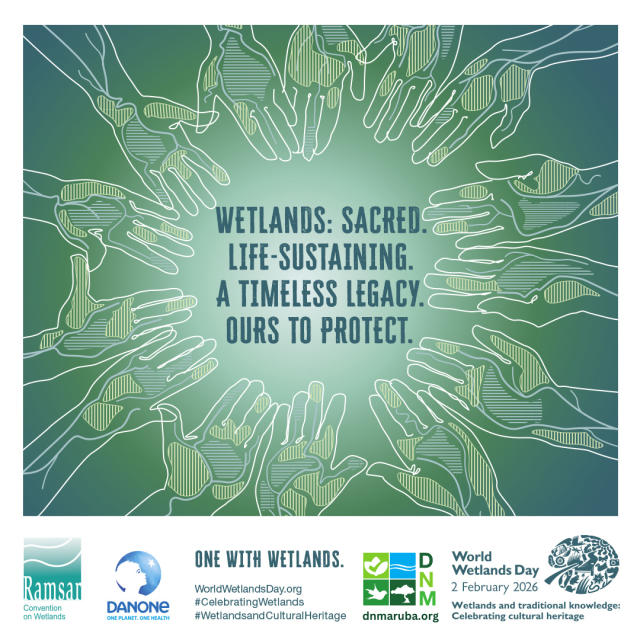
The theme for 2026, “Wetlands and Traditional Knowledge: Celebrating Cultural Heritage,” holds special meaning for our island, where the sea and coastline have always played a fundamental role in our identity, culture, and survival.
The Department of Nature and Environment (DNM) is responsible for sharing important information related to the conservation of ecosystems such as wetlands. In Aruba, these include natural salt marshes like Spaans Lagoen, as well as human-made wetlands such as Bubali Plas. All of these areas provide essential services to nature, the environment, and our communities.
Spaans Lagoen, one of Aruba’s most significant wetland areas, consists largely of mangrove forests and is officially recognized worldwide as a Ramsar site, highlighting its international ecological importance.
Why wetlands matter
Wetland ecosystems provide vital services, including:
- Coastal Protection: Mangroves, anchored firmly in the soil, together with coral reefs, act as natural barriers against the force of the sea and help reduce the impact of extreme weather events such as hurricanes and storm surges.
- Biodiversity: Wetlands serve as nurseries for fish and provide habitats for local and migratory birds, as well as many other plant and animal species.
- Cultural Heritage: Many traditional fishing practices and ancestral knowledge about sea behavior are directly connected to these areas.
Traditional knowledge
This year’s campaign emphasizes the importance of traditional knowledge passed down through generations. This wisdom is key to the sustainable management of our natural resources. By combining modern science with the knowledge of our local communities, we can more effectively protect Spaans Lagoen and other protected areas.
A call to action
Despite their immense value, wetlands in Aruba face growing threats from pollution, unsustainable development, and the effects of climate change. The 2026 celebration serves as a reminder that wetlands are not empty land, but living systems that support our environment, culture, and way of life.
The invitation extends to the entire Aruban community—schools, families, and environmental organizations—to reflect on the value of our coasts and salt marshes and to actively participate in conservation efforts, ensuring that future generations can also enjoy and benefit from them.
What can you do?
- Learn more: Visit Spaans Lagoen and learn about the importance of mangroves and wetland ecosystems.
- Keep it clean: Do not dispose of garbage in salt marshes or near coastal areas.
- Share: Use the hashtag #WorldWetlandsDay2026, tag @dnmaruba, and share your story or photos of Aruba’s wetlands on social media.
Happy World Wetlands Day 2026!